How does Japan mark Harvest and Gratitude?
勤労感謝の日
- Local date
- November 23, 2026
- When is it?
- November 23 (fixed on the Gregorian calendar)
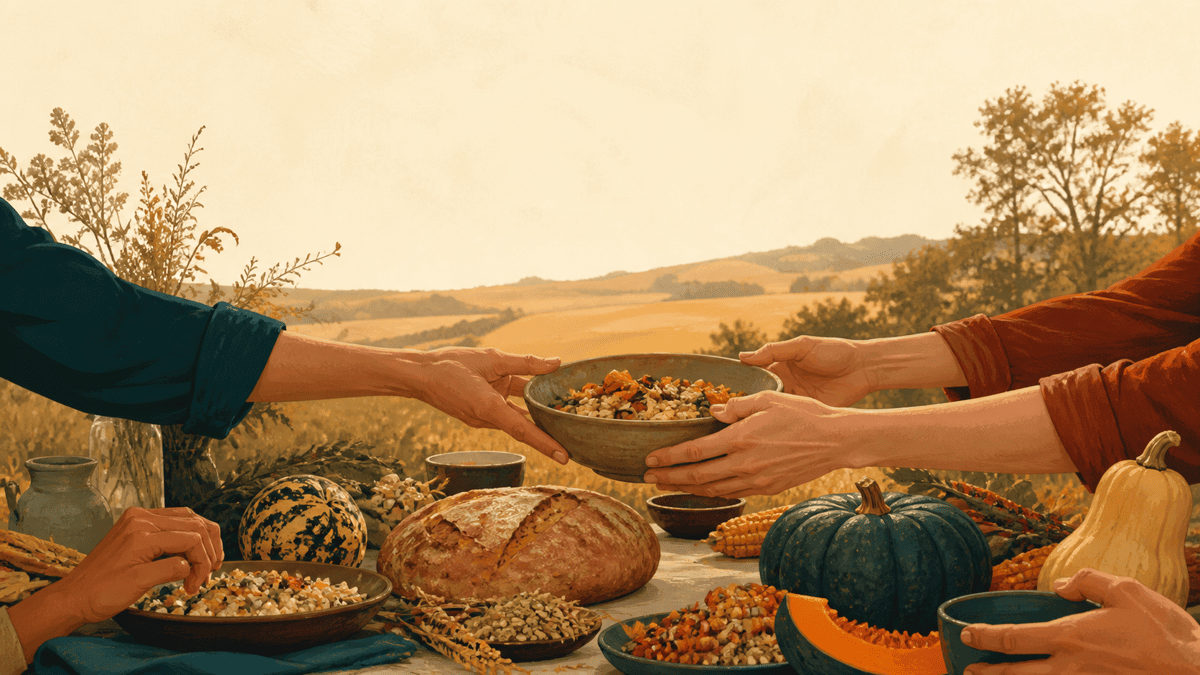
In Japan, 23 November is the national holiday Kinro Kansha no Hi, whose stated purpose is to honour labour, celebrate production, and give thanks to one another. The date was previously Niiname-sai, the imperial rite in which the Emperor offers the new grain to the deities. When the postwar holiday law was drafted, the date was kept and the subject was swapped: an imperial harvest rite became a day on which the whole population thanks one another for their work. The harvest did not vanish from the holiday, but it was renamed 'production'. The date of 23 November is far older than the holiday's name: it was the harvest thanksgiving rite at which the emperor offered and tasted the year's new grain. The 1948 Act on National Holidays rewrote it as Labour Thanksgiving Day, its text speaking of honouring labour, celebrating production and citizens thanking one another — the object of gratitude moved from grain to work, while the date did not shift by a day. The same slot changed its contents, and that is an easy line to read past on a holiday table.
What is this topic?
Whether the harvest becomes a holiday, and who gets to define it, is answered five different ways: the United States built a federal holiday around the family table; India's Pongal is timed by the Tamil calendar and the sun's entry into Capricorn, and the pot of rice is the rite itself; Brazil ties it to three saints' days in June; mainland China created a farmers' festival by State Council approval in 2018; and Japan rewrote a prewar imperial harvest rite into a national day for thanking labour.
🗳️ What about you?
Asked by the 🇨🇳 中文(简体) community
For the 🇧🇷 Português community
Do you have a day for giving thanks for the harvest? In which season?
Live answers aren't available right now. Read the topic below.
Sources and dates
Dates follow local time zones, calendars, and official notices. Check the source when a date is estimated or locally variable.