Topic: Diwali Dates and Holidays
How does India mark Diwali Dates and Holidays?
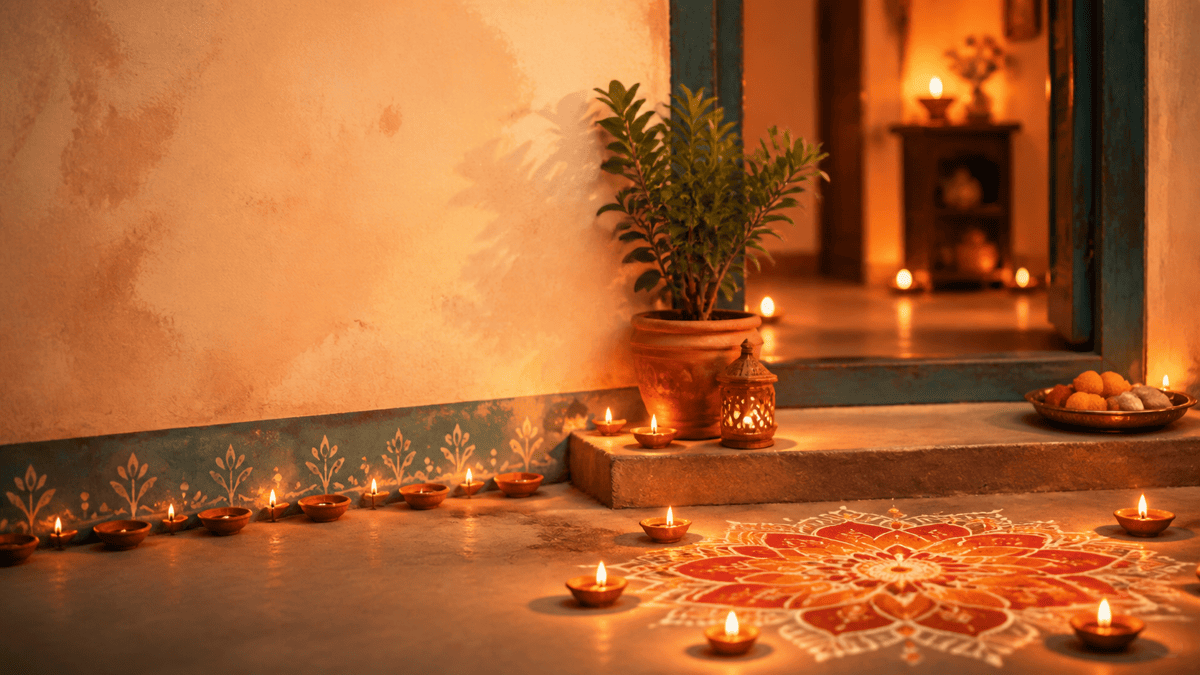
Dhanteras
- Local date
- November 6, 2026
- When is it?
- Two days before the main day; the tithi sequence in the Indian lunisolar calendar may be compressed, so the actual date depends on local almanacs
The season opens with Dhanteras. The customary act is buying gold or new metal utensils and offering prayers at home, treating acquisition itself as a way of welcoming abundance. It usually falls two days before the main day, but days in the Hindu lunisolar calendar can compress, so the actual date follows local almanacs. What is bought, and how much, depends heavily on income and region. Since 2016 this day carries an additional official identity: the Indian government also designated it National Ayurveda Day, on the ground that it is the birth anniversary of Dhanvantari, the physician of the gods. Two things therefore sit on the same date — the household buying of metal and the lighting of lamps that continue as before, and a nationwide campaign run by the health authorities. A traditional festival being used as a public-health calendar slot happens on none of the other four days.
Diwali / Deepavali
- Local date
- November 8, 2026
- When is it?
- The new moon day of the month of Kartika in the Hindu lunisolar calendar; the third day of a five-day festival period
The main day is the third of the five. Households light lamps and offer prayers to Ganesha and Lakshmi for prosperity. India's tourism ministry points to Ayodhya, Varanasi, Amritsar, Jaipur, and southern regions as places where the season is most visible, but how many lamps are lit, which deities are honoured, and whether there are fireworks vary a great deal between households. In 2025 Deepavali was inscribed on UNESCO's list of the Intangible Cultural Heritage of Humanity.
Govardhan Puja
- Local date
- November 9, 2026
- When is it?
- The day after the main day; the tithi sequence in the Indian lunisolar calendar may be compressed, so the actual date depends on local almanacs
The fourth day of the season is Govardhan Puja. It commemorates Krishna lifting Mount Govardhan to shelter villagers from the rain, and is commonly kept with an annakut, an offering of food heaped into a hill, stacking the mountain and the idea of abundance into one image. The day shifts the weight of the five-day season from household wealth towards community and livestock — Diwali is not only lamps; a whole narrative of farming life sits in the middle of it.
Bhai Dooj
- Local date
- November 10, 2026
- When is it?
- Two days after the main day; the tithi sequence in the Indian lunisolar calendar may be compressed, so the actual date depends on local almanacs
The season closes with Bhai Dooj, where the focus shifts from deities back to siblings: sisters perform the Tika ceremony and pray for their brothers' long life, and brothers give gifts in return. This keeps Diwali from being only about prosperity; it is also a renewal of kin obligation. Households without siblings, or communities that do not keep this rite, do not treat the season as incomplete. The last of the five days follows a different line of relation: not the household to wealth, nor the household to the gods, but sisters to brothers. The sister marks her brother's forehead and prepares food; the brother answers with a gift. This day explains why treating Diwali as a single evening goes wrong — each of the five days addresses a different party, and this one addresses the mutual keeping between siblings.
What is this topic?
Diwali is a five-day season, not a single day.
This page separates the main day (Lakshmi–Ganesha Puja) from the opening Dhanteras and the closing Bhai Dooj, and compares two very different statuses: a national holiday with a five-day ritual sequence in India, and a public-school closure in New York City that only became law in 2023.
🗳️ What about you?
Asked by the 🇹🇼 中文(台灣) community
For the 🇮🇳 हिन्दी community
How many days does Diwali last for you?
Live answers aren't available right now. Read the topic below.
Sources and dates
Dates follow local time zones, calendars, and official notices. Check the source when a date is estimated or locally variable.