Topic: Equinoxes and Solstices
How does Japan mark Equinoxes and Solstices?
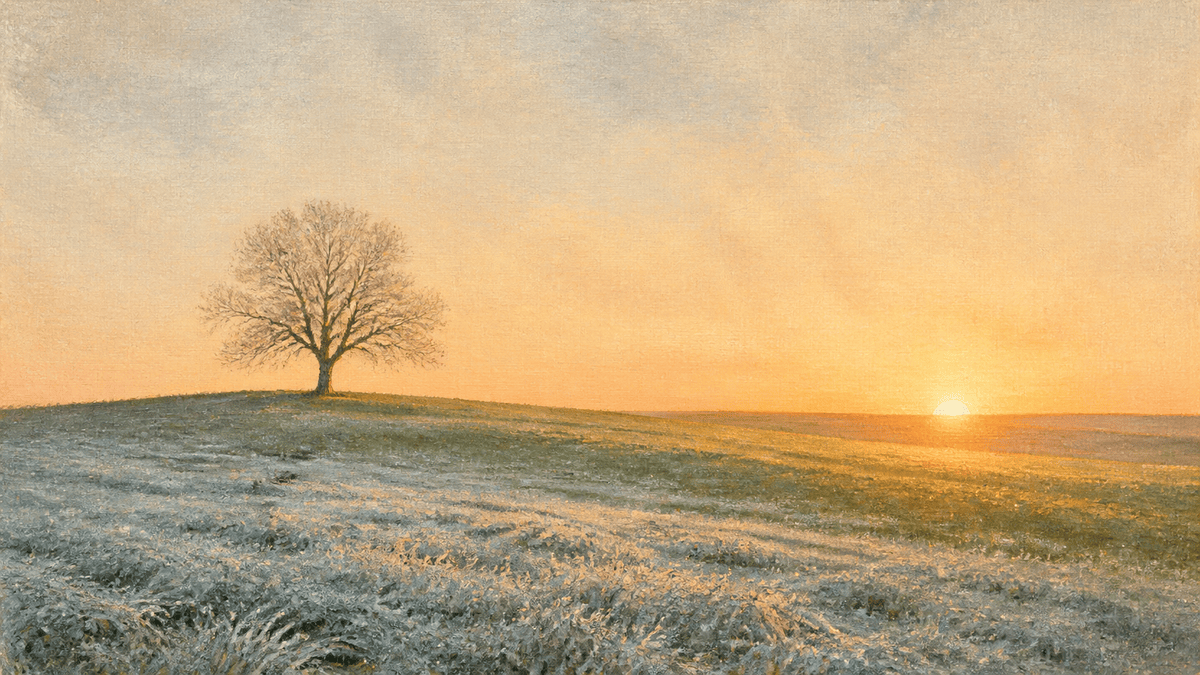
冬至
- Local date
- December 22, 2026
- When is it?
- The day containing the moment the sun reaches 270 degrees of ecliptic longitude.
The winter solstice is not a holiday in Japan. In 2026 the moment falls at 05:50 Japan time on 22 December. The customs are food and bathing: eating pumpkin — nankin, one of the foods whose name carries the syllable "n," said to bring luck — and soaking in a bath of yuzu citrus for health through the winter. Materials from the Kyushu agricultural bureau of the agriculture ministry call the day ichiyo-raifuku, the return of the light, and note that pumpkin is a summer crop that grows sweeter in storage, which is why a summer vegetable ends up on a midwinter table. That same instant is recorded in Taiwan as 04:50 and in Indonesia as 03:49 — one event, three clocks.
節分
- Local date
- February 3, 2027
- When is it?
- The day before risshun, the start of spring, which is the day containing the moment the sun reaches 315 degrees of ecliptic longitude.
Setsubun is not a holiday, yet it is one of the most-searched dates in the Japanese calendar, and its date is entirely at the mercy of the sun: risshun is the day containing the moment solar longitude reaches 315 degrees, and setsubun is the day before it. The observatory published a note when this became visible — setsubun fell on 2 February in 2021, the first time since 1897, one hundred and twenty-four years; it was 2 February again in 2025; in 2026, 2027 and 2028 it returns to 3 February. The ritual is mamemaki, throwing roasted soybeans to the shout of "demons out, fortune in." Kyoto's cultural properties division explains that Japan has long scattered the five grains along with salt and sand to drive off malign influence, and gives competing reasons for the soybean: a Chinese classic saying the bean kills demon-poison and stops pain, and a pun in which mame, bean, is heard as "demon's eye" and then as "demon destroyed." The beans must be roasted — fukumame, lucky beans — and the city of Kanoya gives two reasons: to roast, iru, is a homophone for to shoot, and a raw bean missed in the clean-up might sprout, which reads as bad luck. Agriculture ministry material dates the custom to the Muromachi period, notes that the thrower was traditionally the toshiotoko, the man born under the year's zodiac sign, or the head of the household, and that you then eat as many beans as your age — Kanoya says your counted age, the ministry says your age or your age plus one — for a long life without illness; in Hokkaido, the northeast and southern Kyushu people mostly throw peanuts instead. The doorway has its own rite: the Mie prefectural history records a grilled sardine head skewered on a sprig of holly and stuck outside the door or window, thorns and burnt-fish stink together turning back evil, known in the prefecture as yaikagashi, "burnt stink," and locally also as "demon's eye-poke"; Kanoya adds that parts of western Japan do not merely hang the sardine but eat it. The ehomaki roll went national only recently: the ministry explains that the eho is the compass direction occupied that year by the year-god, fixed by the year's heavenly stem — its worked example gives 2023 as south-southeast — and you face that way and eat a whole thick roll in silence without cutting it, often with seven fillings for the seven lucky gods, since cutting it would mean cutting a tie. The custom had been forgotten and was revived by a 1977 campaign by Osaka's seaweed wholesalers, then pushed nationwide by convenience-store marketing. It is now a policy file too: every year the ministry sends food retailers a notice asking them to sell to actual demand and cut waste, and the one dated 24 December 2025 covers the 2026 season.
お彼岸(春彼岸)
- Local date
- March 18, 2027–March 24, 2027
- When is it?
- Seven days centred on the vernal equinox: the equinox itself plus the three days before and after.
Higan is a zassetsu, a traditional calendar marker, not a holiday. It runs seven days centred on the equinox, and the observatory's tables publish the entry day: 17 March in 2026, 18 March in 2027. Families visit graves, temples hold higan-e services, and botamochi rice cakes are offered. None of that is state business — but because the middle day is the statutory holiday, Japanese families in practice sweep graves on a date computed by an observatory. Search demand sits here rather than on the holiday: far more people look up "ohigan" than "shunbun no hi."
春分の日
- Local date
- March 21, 2027
- When is it?
- The day containing the moment the sun crosses the vernal equinox point. Calculated by the National Astronomical Observatory of Japan and made official only when it appears in the gazette the previous 1 February.
Article 2 of Japan's Act on National Holidays (Act No. 178 of 1948) does not give Vernal Equinox Day a month and a day. Where the other holidays list a date, this one lists "the vernal equinox day," with the stated purpose of praising nature and cherishing living things. Which calendar day that is comes from the National Astronomical Observatory of Japan, and it becomes legally settled only when the observatory's Reki-yoko tables are printed in the official gazette on 1 February of the preceding year — the 2026 edition was released on 3 February 2025, the 2027 edition on 2 February 2026. So Japan's 2028 holidays are, as this page is written, not yet fixed in law; the observatory's computed value is 20 March. The 2026 equinox itself fell at 23:46 Japan time on 20 March. Fourteen minutes later and the holiday would have moved to the 21st.
お彼岸(秋彼岸)
- Local date
- September 20, 2027–September 26, 2027
- When is it?
- Seven days centred on the autumnal equinox: the equinox itself plus the three days before and after.
Autumn higan works the same way, seven days centred on the September equinox; the observatory lists the entry day as 20 September in both 2026 and 2027. The offering changes name from botamochi to ohagi, though it is the same sweet renamed for the season. Here the Buddhist observance and the statute agree on the reason as well as the date: the holiday's purpose written into the Act is honouring ancestors and remembering the dead.
秋分の日
- Local date
- September 23, 2027
- When is it?
- The day containing the moment the sun crosses the autumnal equinox point, announced in the same gazette in February of the preceding year.
In the same statute, Autumnal Equinox Day is the one holiday out of sixteen whose stated purpose names the dead: to honour ancestors and remember those who have passed. Its date is written the same way — "the autumnal equinox day" — and settled the same way. In 2026 it lands on Wednesday 23 September, while Respect-for-the-Aged Day, the third Monday of September, falls on the 21st. The 22nd is sandwiched between two holidays and therefore becomes a holiday itself under Article 3(3), producing five straight days off from Saturday the 19th. That clause only ever fires because the autumnal equinox drifts between 22 and 24 September.
What is this topic?
These are the only holidays whose date nobody chose.The sun reaches a point on the ecliptic and that is the day.
What differs is how each state writes that fact into law.
Japan made the spring and autumn equinoxes statutory holidays without naming a date, leaves the calculation to its national observatory, and only fixes each year's dates in an official gazette the previous February.
Taiwan's holiday act dates exactly two days by solar term and never mentions the winter solstice.
In China only one statutory holiday, Qingming, is dated by the sun.
India's Makar Sankranti has drifted three weeks away from the solstice it once marked.
The United States skipped astronomy altogether and legislated "the second Sunday of March."
🗳️ What about you?
On the day of an equinox or solstice, what does it usually look like where you live?
Live answers aren't available right now. Read the topic below.
Sources and dates
- eco.mtk.nao.ac.jp/rekiyou262.html ↗
- maff.go.jp/net-35.pdf ↗
- eco.mtk.nao.ac.jp/topics2021_2.html ↗
- kyo-tsunagu.city.kyoto.lg.jp ↗
- maff.go.jp/spe13_04.html ↗
- bunka.pref.mie.lg.jp ↗
Dates follow local time zones, calendars, and official notices. Check the source when a date is estimated or locally variable.